

On the pulse
The other half of the work: helping schools see whether what they’ve built is truly making a difference.

Earlier this year, I asked a principal: if she had one wish, what would it be?
She thought for a moment, then said, “I wish I could stay on the pulse of what my school needs.”
That phrase stuck with me.
She didn’t just mean test scores or attendance reports. She wanted to understand what her school needed most: what students were struggling with, what was working, and where support was falling short.
That wish isn’t unique to her. It’s what so many educators are trying to do within their classrooms.
Many teachers have incredible ideas and interventions. They laboriously build custom programs and supports that are thoughtful, creative, and responsive. But when it comes time to measure whether those efforts worked, the process breaks down. There’s no clean way to see if students felt more supported, more confident, or more connected.

It’s surprisingly difficult to measure the impact of something that’s custom-built.
If you design your own program, there’s often no standard benchmark, no external evaluation, and no quick survey that fits your exact goals. So most people rely on gut instinct or personal observations.
Yet research is clear that student perception (how students feel about belonging, safety, and engagement) is one of the strongest predictors of both academic and emotional growth. One large study found that students who feel they belong at school are more likely to stay through graduation (93% vs. 84%) and are six times more likely to recommend their school to others.
And while many districts collect student feedback, fewer than half report having a clear, consistent way to measure what that data means for learning outcomes.

The problem isn’t that schools don’t care about data. It’s that they don’t have simple tools to understand whether what they’re doing is really making a difference.
The other half of the work
Creating a program is only half of the work. The other half is being able to say, “We know this made a difference.”
That’s where many teams get stuck. They need a way to measure what’s specific to them: a check-in that reflects their goals, their students, and their approach. They need surveys that are quick, aligned, and built around their real programs, not generic templates.
They need something that keeps them connected to what students are actually experiencing.

We saw this gap again and again.
If schools are going to address the whole child (not just academics, but wellbeing and growth) they need tools that make reflection and measurement simple, meaningful, and sound.
We built Lenny’s survey developer to do exactly that.
Lenny is helping schools stay on the pulse
Last month, we launched Lenny’s custom survey developer, designed to help schools stay on the pulse of what students need.
Here’s how it works:
You tell Lenny your goal. That might mean assessing school climate, checking in with students, progress monitoring a skill, or creating pre- and post-surveys for a program or curriculum you’ve built.
Lenny then draws from validated, research-based survey frameworks that are grounded in child and adolescent development and supported by established psychometrics. The result is a set of questions that are sound, age-appropriate, and aligned to your goals.
Once you collect responses, Lenny helps you interpret the data. You can see patterns, measure change, and understand where support is most needed.
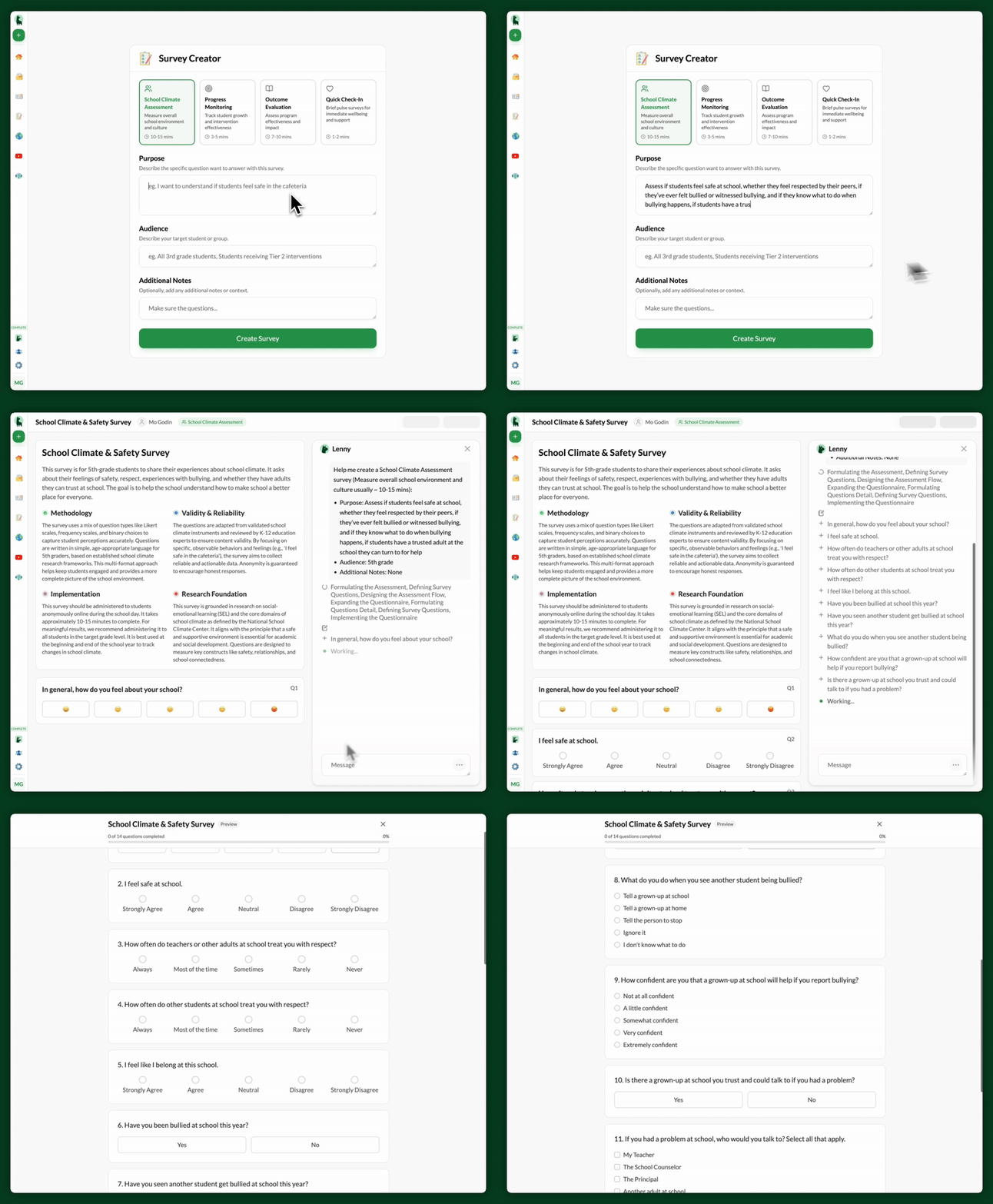
With Lenny, you can now:
Create custom surveys for climate checks, needs assessments, progress monitoring, or student reflection.
Align survey questions directly to your program goals and objectives.
Collect fully anonymized responses, see results right away, and track change over time.
Every time you build a new program or intervention, you can create a survey that’s connected to it. Your data stays tied to your goals from day one.
When schools have this kind of visibility, three things happen:
Staff can adjust and improve in real time.
School leaders can identify what’s working and scale it.
Students feel heard and part of the process.
Want to stay on the pulse of what’s working in your schools?
If your district is looking to design a custom MTSS program (one that includes personalized curriculum, targeted interventions, and built-in ways to measure impact) we’d love to help.
At Lenny, our mission has always been to give schools the tools to assess, address, and empower every student.
The new survey tool is one small but important step toward that goal. It helps schools listen better, respond faster, and see the impact of what they’re building.
Because when schools understand what students need (and measure the change they’re making) they create systems that truly grow with their students.